
01
Measure the full route
Check gates, driveway edges, tight turns, and the final approach—not only the pad itself. The building and delivery equipment both need room to move.
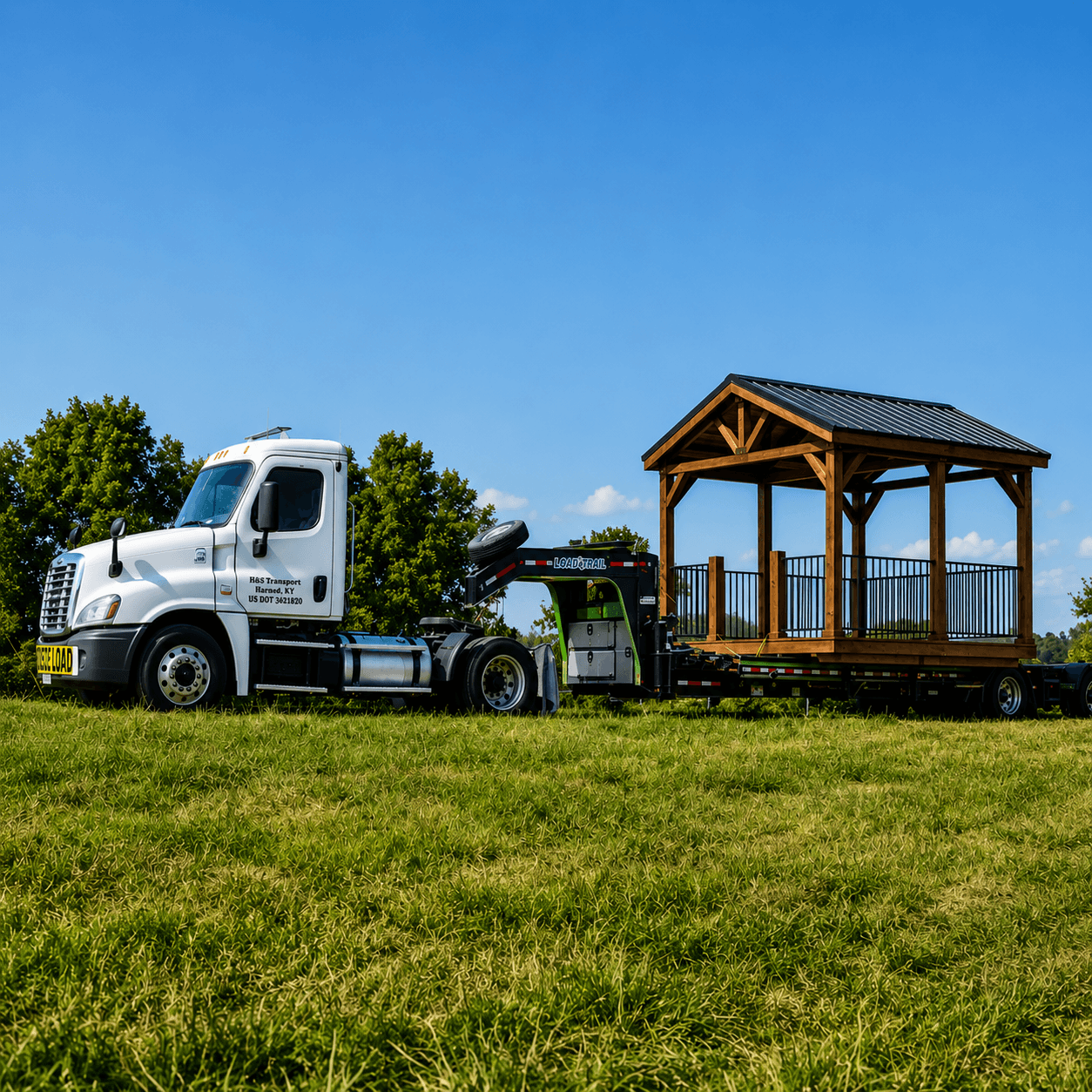
Site prep & delivery
Plan the foundation, clear the route, and know exactly what to expect. We will help you think through the details before placement day.
We help review access and placement
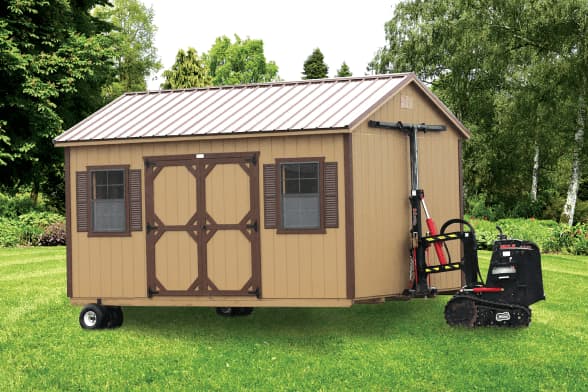
A Mule helps with careful positioning
One coordinated path to final placement
The preparation plan
Every property is different. Use this as your first walk-through, then share anything unusual with Apex so the delivery team can plan around it.
Check gates, driveway edges, tight turns, and the final approach—not only the pad itself. The building and delivery equipment both need room to move.
Identify low branches, wires, eaves, fences, septic areas, and landscaping. Never move utility lines yourself; contact the utility owner when needed.
A firm, dry route is safer than soft or saturated ground. Steep grades, mud, and sharp transitions may change how—or when—the building can be placed.
Decide which direction doors and windows should face and clearly mark the corners. Keep enough open working space for careful placement.
Confirm local requirements first
Check permits, setbacks, easements, utilities, and HOA rules with the authorities responsible for your property before site work begins.
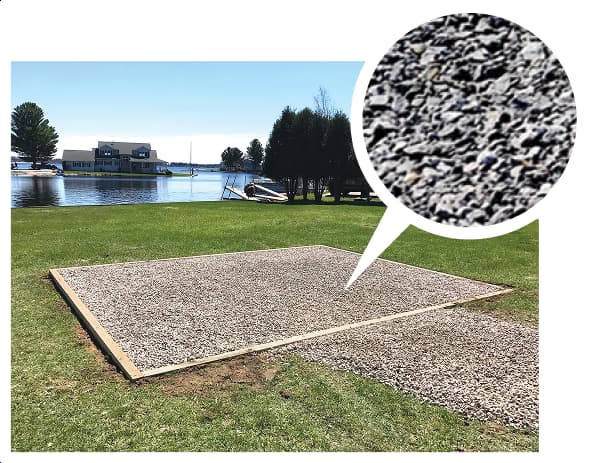
Apex recommendation
Crushed limestone pad
Build from the ground up
A well-prepared base helps support the building, manage water, and make accurate placement possible.
4–6 in.
Apex’s recommended depth of crushed limestone.
+2 ft.
The pad should be at least 2 feet wider and 2 feet longer than the shed.
A lighter final approach
Once the trailer is close, our maneuverable Mule shed mover helps guide many buildings into position. It can work in tighter locations and is designed to leave tracks similar to a large lawnmower rather than bringing the full delivery truck across the yard.
Access still matters.
Building dimensions, turns, slopes, overhead obstacles, and ground conditions all affect placement. Let the Apex team review a challenging route before delivery day.
A real Apex delivery
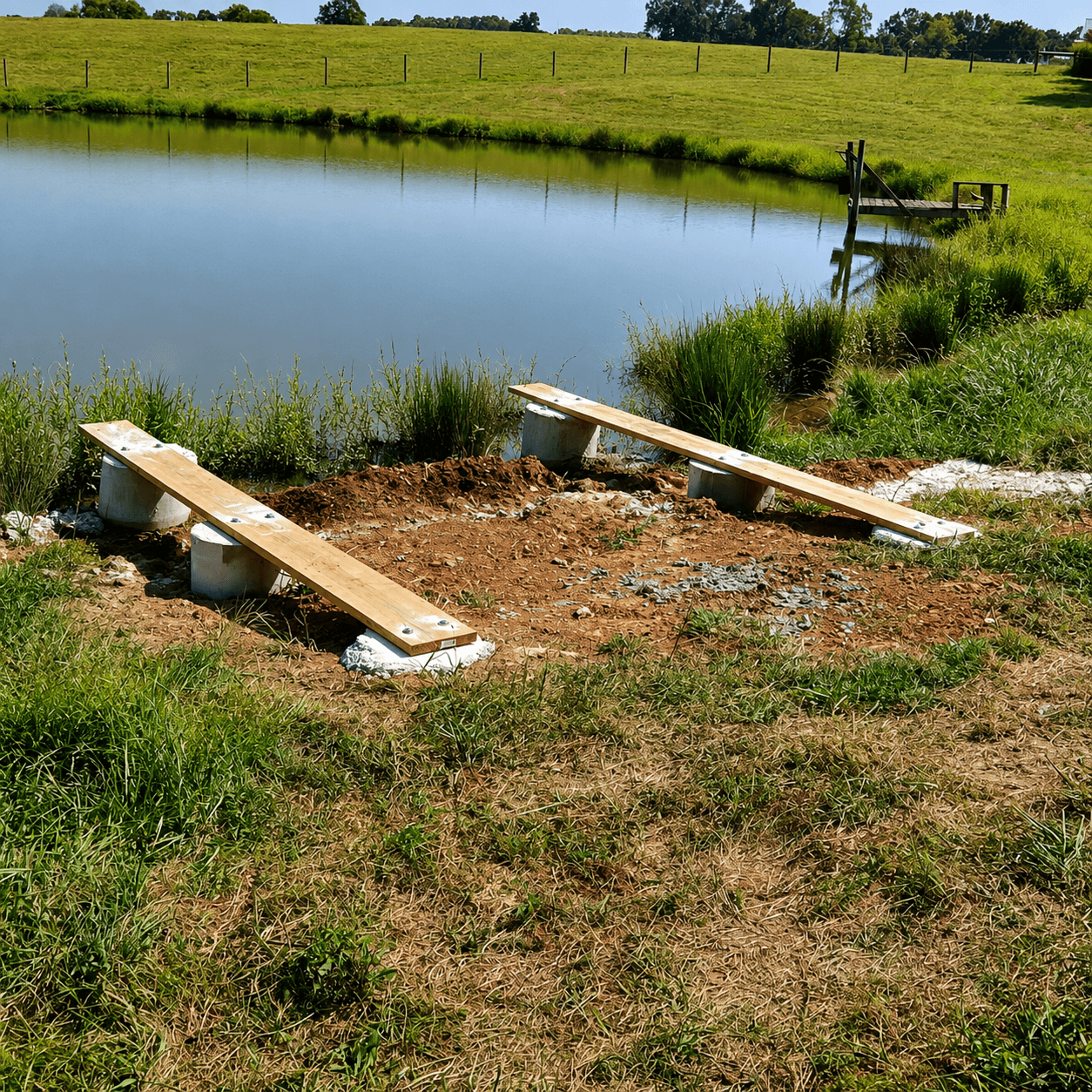
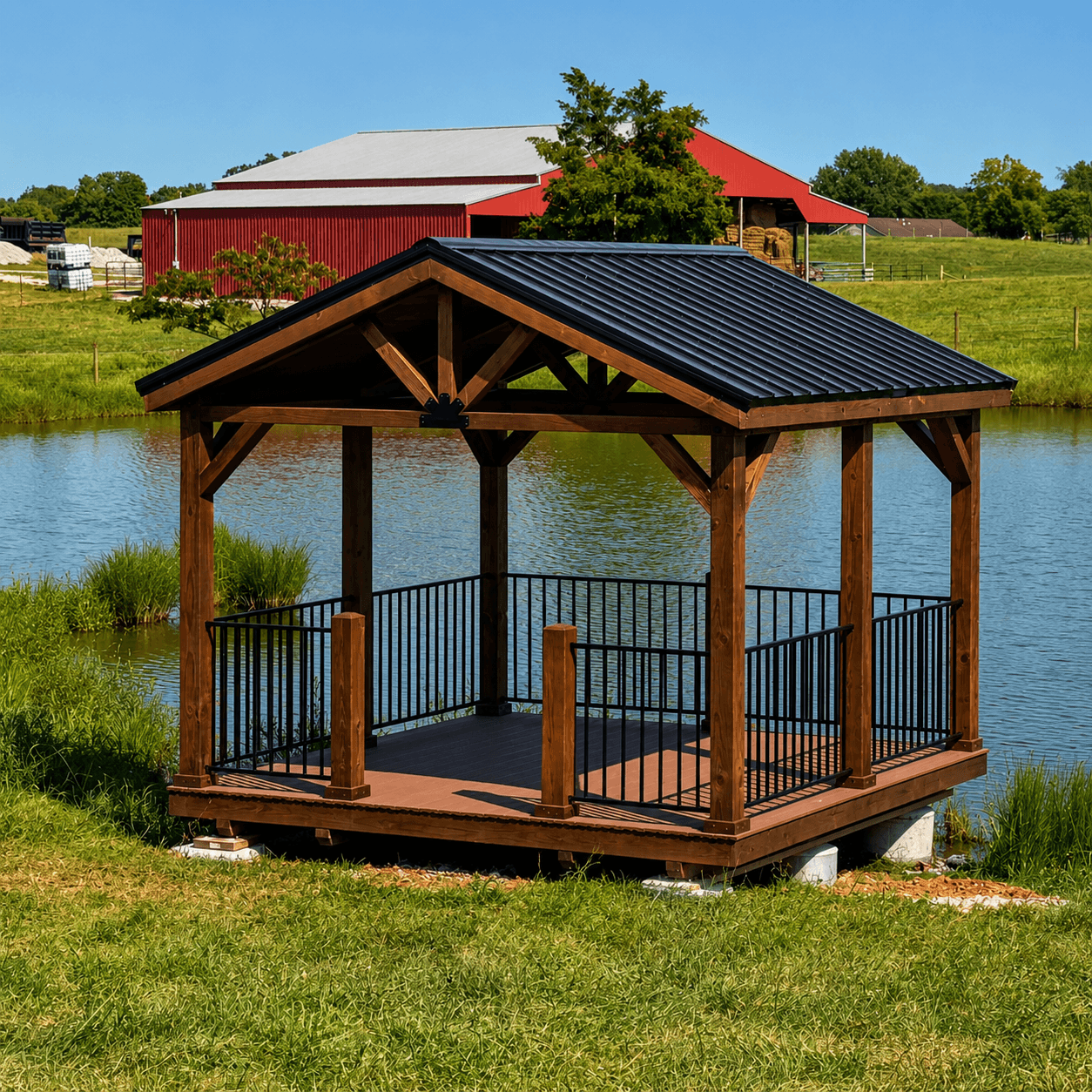
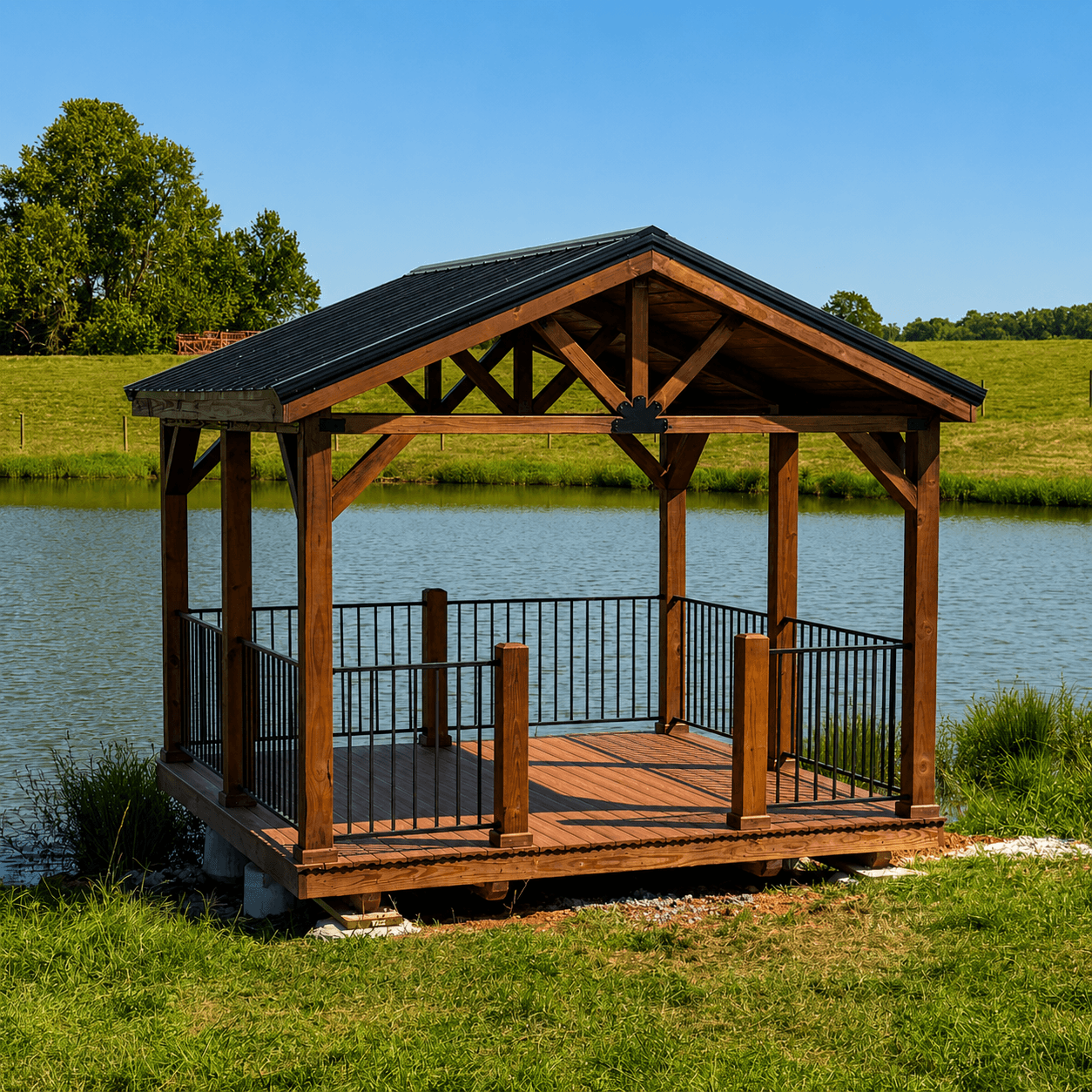
This pavilion’s pond-side placement shows why planning matters: the foundation was prepared, the route was considered, and the setup team could focus on a precise final position.
What to expect
Share your building size, destination, route, and any obstacles. Photos are useful when access is unusual.
Complete the pad before delivery and keep the route clear, firm, and ready for our equipment.
Our team coordinates the delivery and reviews site conditions, access, and placement details with you.
We unload, maneuver, position, and level the building at the prepared location.
Weather can change the plan. Soft, saturated, snowy, or unsafe conditions may require a different approach or delivery date. Protecting your property, building, and crew comes first.
Straight answers
Tell us where your building is going. We will help you think through the pad, access route, and final placement.